Written by Vivexa Tech · 8 September 2026
Every time you browse the internet, shop online, or read an article, you are interacting with web design. A well-designed website does far more than look visual—it guides users effortlessly toward their goals while communicating a brand’s identity.
Defining Web Design Web design is the process of planning, conceptualizing, and arranging content online. It encompasses everything from visual elements like layout, typography, and color schemes to functional aspects such as user interface (UI) structure, navigation, and overall user experience (UX).
While web development focuses on the back-end code and technical logic that makes a site function, web design focuses on the front-end interface and human-computer interaction.
Core Elements of Effective Web Design
User Interface (UI): The visual layout, buttons, forms, and graphical elements that users interact with directly.
User Experience (UX): The strategic flow and architecture designed to make navigation intuitive, seamless, and efficient.
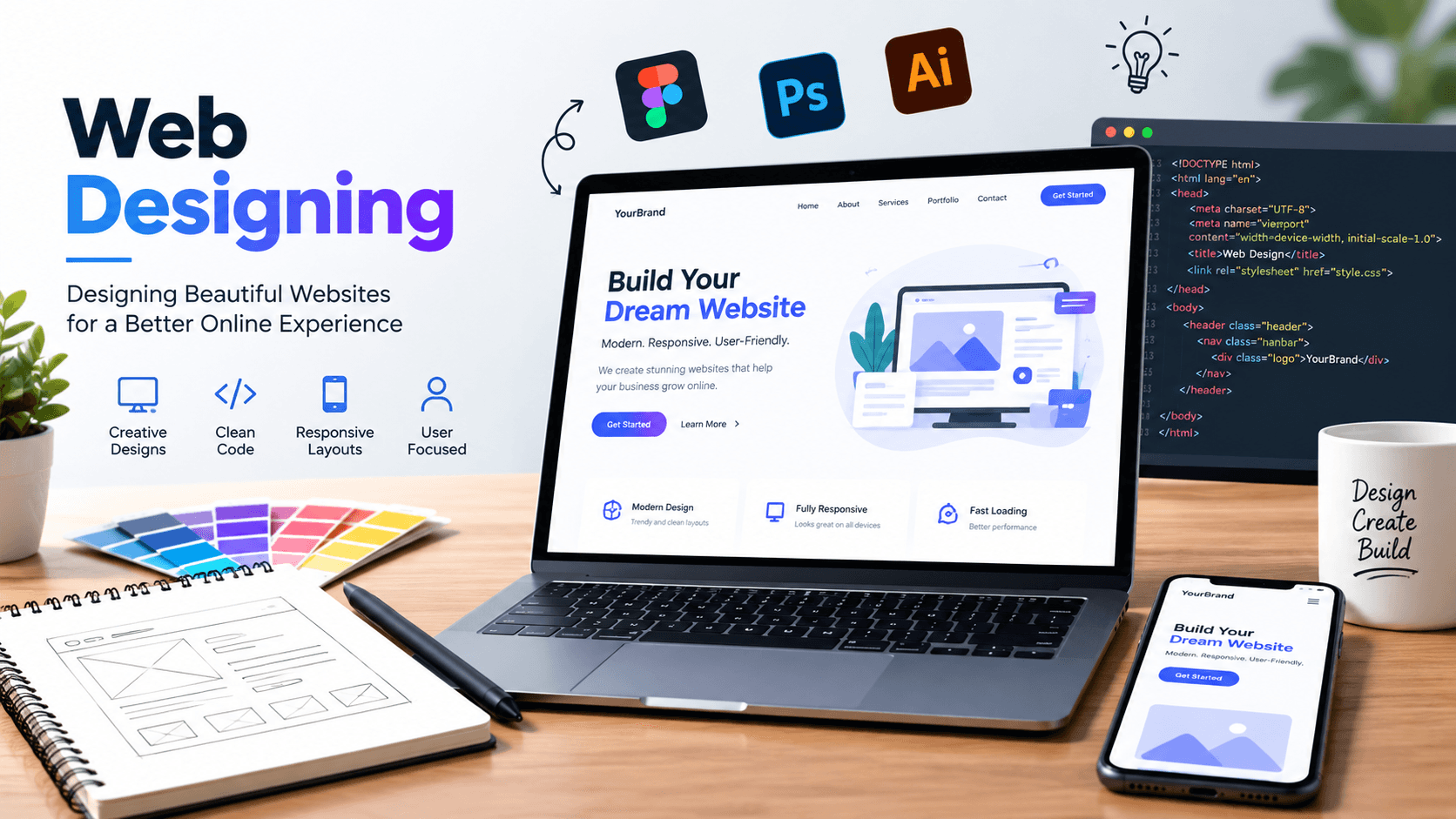
Responsive Layouts: Ensuring websites adapt smoothly across mobile devices, tablets, and desktop screens.
Visual Hierarchy: Structuring headings, images, and white space to direct the user’s eye to key information naturally.
Why Good Web Design Matters
First Impressions: Visitors judge credibility within seconds of landing on a homepage.
SEO Performance: Clean structure, mobile optimization, and fast loading times directly improve search engine rankings.
Higher Conversions: Clear call-to-action buttons and intuitive layouts reduce bounce rates and guide users toward conversion points.
Great web design harmonizes aesthetics with utility—creating digital experiences that are engaging, accessible, and purposeful.